Nick Schuyler
Not Without HopeNick Schuyler is the narrator and sole survivor of the 2009 Clearwater boating accident, a forty-three-hour ordeal in the Gulf of Mexico that killed his closest friend, Will Bleakley, and his companions Marquis Cooper and Corey Smith. His decisive significance is not that he emerges as an uncomplicated hero, but that survival leaves him as the only witness able to reconstruct what happened, defend the dead against rumor, and live with the unanswered question of why he remained alive when three equally young, athletic men did not.
Identity and Background
Nick is presented as a twenty-four-year-old athlete and personal trainer whose physical condition initially seems to promise resilience but cannot explain the outcome by itself. He had grown up in Chardon, Ohio, outside Cleveland, where his mother took him fishing from a park dock; deep-sea fishing was almost entirely new to him. Before the fatal trip, he had gone offshore only once, from Virginia Beach at age seven, and had spent that outing vomiting rather than fishing. His role among the group was therefore less that of an experienced fisherman than an athletic friend accompanying Marquis Cooper and Corey Smith on an unfamiliar adventure.
Nick’s ordinary world was defined by training, friendship, family, and a life in Tampa. He had a close bond with Will Bleakley, whom he calls his best friend and “wingman,” and maintained a romantic relationship with Paula Oliveira. His family included his mother Marcia Schuyler, his father, and his sister Kristen Schuyler. The trip began within that familiar network: before dawn on February 28, 2009, Nick ate cereal and a protein bar, helped load Will’s truck with gear, a cooler, grocery bags, and beer, and left for Marquis’s house.
The Sea and the Survival Ordeal
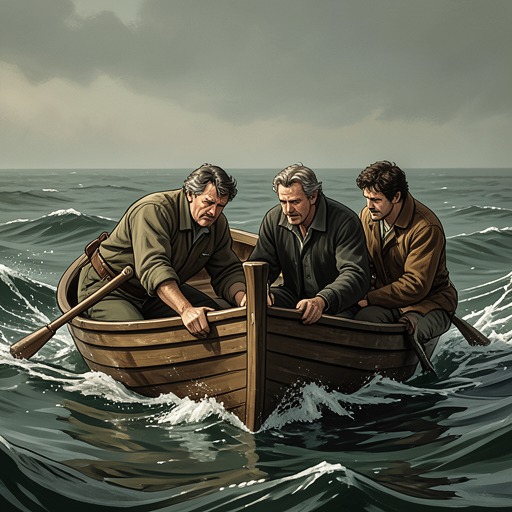
Nick entered the Gulf of Mexico as a recreational fisherman but quickly encountered a setting whose scale overwhelmed ordinary athletic confidence. The group traveled seventy-five miles west of Clearwater to water about 150 feet deep, amid five- or six-foot seas that came randomly from different directions. The boat repeatedly pounded through the waves, the men struggled with the anchor, and Nick developed severe seasickness after ignoring advice to take Dramamine. The experience exposed the gap between gym-trained strength and maritime competence: his body was powerful, but the sea controlled movement, balance, visibility, and endurance.
After the boat capsized, Nick became part of a desperate collective effort to remain alive. The four men huddled on the overturned hull, pressing their bodies together to preserve heat while shivering and hearing one another’s teeth chatter. Around nine o’clock, Corey Smith’s waterproof Nike watch helped them track time, and the group said the Lord’s Prayer. Their conversations turned toward families, regret, college football, and the lives they might have lived differently. Nick told the others that he loved them, receiving no verbal reply but understanding from their reactions that the feeling was shared.
The survival conditions steadily stripped away physical reserves. By dawn on March 1, Nick had been in the water about fifteen hours and awake for more than a full day. He was starving, thirsty, nauseated, and aware that his body was becoming thinner after having been unable to keep food down since seasickness began. The sea also became a field of uncertain perception. He saw what appeared to be a giant squid, with long pale and purplish-gray tentacles extending beneath the boat, and later saw two fins moving in a straight line near the hull. He recognized the latter as probably sharks, perhaps attracted by blood or loose bait, and warned Will to remain on the boat.
Nick’s endurance depended on shared labor rather than individual will alone. Will went beneath the overturned boat to retrieve life jackets, Gatorade, and pretzels, actions that helped extend Nick’s life even as Will’s own condition deteriorated. By the next dawn, only Nick and Will remained. Nick had lost two friends who had seemed indestructible, yet daylight offered a renewed possibility that searchers might see them against the waves. That hope remained fragile: the sea produced consistent ten-footers, rain, cold, exhaustion, and a horizon in which a person or small hull could disappear among whitecaps.
Rescue and Medical Consequences
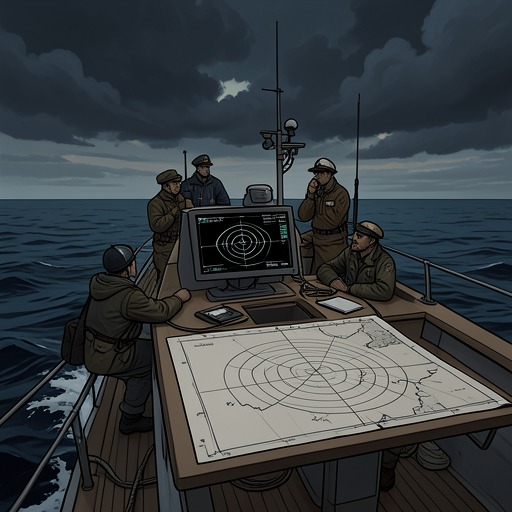
Nick was finally located by a lookout aboard the USCGC Tornado at 11:43 a.m., about thirty-eight miles west of Tampa. Michael Briner first noticed an orange speck and a white wave that did not vanish like the surrounding breakers. The search itself was difficult because a capsized twenty-one-foot boat could resemble debris or a whitecap, while waves continually concealed objects and made the ship’s own horizon unstable. Twelve minutes elapsed between Briner’s sighting of Nick and Nick’s arrival aboard the rescue boat.
The rescue did not immediately feel safe to Nick. When he saw the life raft approaching, he could barely keep his eyes open, but the return of feeling to his body also made the cold painful again. Although he was told to wait, he intended to enter the water and reach the larger vessel himself. The rescue crew gave him a flotation device and hauled him in, while Nick repeatedly thanked the man who reached him. His urgency reflects the extremity of the preceding forty-three hours: even after being found, remaining passive felt less bearable than risking another movement.
Nick was transported by air to Tampa General Hospital, where he arrived still profoundly cold and exhausted. Reporters crowded the hospital entrance asking where the others were, while medical staff cut away his jumpsuit, inserted IVs, monitored his heart, and treated him as he struggled to remain conscious. His mother, Marcia Schuyler, eventually found him in Urgent Care, lying among intravenous tubes and doctors. She touched his cold hand, kissed him, and told him that he had frightened her; Nick answered that he knew.
His body temperature had been measured at approximately 88.8 to 89.5 degrees, a range classified as moderate hypothermia. Dr. Mark Rumbak observed that Nick probably could have lived another six to twelve hours in the Gulf and that his temperature rose steadily after he changed out of his wet clothes aboard the cutter and was wrapped in wool blankets. His legs were extensively bruised, requiring vascular checks and compression devices, and his recovery included persistent numbness, scars, altered movement in his right foot, hip and groin problems, bladder symptoms, and digestive disruption. Yet medicine could not give a complete explanation for the difference between Nick’s survival and the deaths of three men of roughly the same age, size, and fitness; Rumbak called the outcome miraculous in a qualified sense.
Grief, Responsibility, and Relationships
Nick rejects the identity of hero. He explains that if he had brought his friends back, even one of them, the label might have made sense, but he did not. He insists that he tried and gave everything he had, while acknowledging that effort did not overcome the sea or the men’s declining condition. This refusal of heroic simplification is central to his character: survival is not presented as victory but as an unresolved ethical fact.
His relationship with Will Bleakley gives that burden its most intimate form. Will had been Nick’s best friend in Tampa, and during the ordeal he worked with Nick to prolong both men’s lives. At Will’s funeral, Nick recognized that he was attending because Will had helped keep him alive; there could easily have been four funerals instead of three. He sent Will’s parents flowers bearing the message, “To the family of the angel that saved my life. He will never be forgotten.” The tribute turns Will’s final actions into the moral center of Nick’s survival, while also intensifying Nick’s guilt over the moments when he could not save him.
At the funeral, Nick repeatedly imagined alternatives: whether better CPR, sharing his jacket, or helping Will beneath the boat might have changed the outcome. He experienced sadness, anger, frustration, and guilt rather than a settled farewell. His grief also extends beyond his own loss. He distinguishes the kind of loss suffered by Will’s parents, Rebekah Cooper and her daughter, and Corey Smith’s family from his own position as a friend who did not lose blood relatives. That distinction deepens rather than relieves his sense of obligation to the families.
Nick’s relationship with Paula Oliveira continues within the afterlife of the accident. His final prayer asks protection for Paula and expresses love and appreciation that he had not always shown. Later, she honors Will with a small anchor tattoo, while Nick creates a permanent memorial for all three men. His family likewise remains part of the emotional architecture of survival: his final words ask protection for his father, sister, and Paula, and his reunion with Marcia in the hospital demonstrates that the ordeal threatened not only his own life but the lives of those waiting for him.
Change, Memory, and Ending
Nick converts memory into testimony because he fears that others will tell the story incorrectly. He had heard rumors that the men were fighting, drinking, or horsing around, that they had given up, that he had harmed or ignored them, and even that pirates had captured them. He writes to replace rumor with fact and to give the families of Marquis Cooper, Corey Smith, and Will Bleakley an account of what happened. He also acknowledges the limits of recollection: the narrative is what he remembers after forty-three hours in cold water, hunger, thirst, fear, and the deaths of three friends, two of them in his arms. Memory is therefore both his evidence and one of his wounds.
His tattoo makes that burden visible. Designed as a Celtic cross, it carries the initials of Victor Marquis Cooper, William Ward Bleakley, and Corey Dominic Smith on its points, the date March 1, 2009, a rope intertwined with the cross, and an anchor at the bottom. Behind it is the Persian proverb “In the hour of adversity, be not without hope.” Nick sees the design as a symbol of the group’s refusal to quit and of the collective work that kept him alive. The tattoo also binds survival to death: it is a permanent mark of the three men who did not return.
Nick resumes full-time work and tries to play basketball once a week and flag football on Saturdays, but the return to routine does not restore his former life. He describes some days as better than others and finds Tampa difficult because Will is absent from the place where their friendship developed. Ordinary plans repeatedly summon Will: Nick thinks of calling him, mistakes another person for him, remembers where Will sat on the couch, and recalls holidays and New Year’s celebrations shared with him. Camping and weekends become questions about whether any activity can be repeated without the person who once made it familiar.
The beach becomes the clearest measure of his altered relationship with the sea. At Indian Rocks Beach near St. Pete Beach, Nick put one foot in the water and told Kristen Schuyler that it was much warmer than the water he had last felt. Before the accident he would have jumped in to rinse sand away; afterward he avoided entering and used a public shower instead. On a later July visit, he and Paula sat at sunset while Nick remained outside for an hour and a half, looking at the water. The surface becomes a trigger for half-second images of the men’s faces, their struggle, and their last words. He cannot simply forget, because the sea remains the place where his friends died and where, in his imagination, they will always remain.
Nick’s ending is therefore not a completed recovery but an ongoing accommodation with survival. He tries to cherish each day and take nothing for granted, yet the same questions return with monthly regularity: why did he live, how are the families coping, and why was he chosen when the others were equally good and fit? The tattoo, the book, his work, and his attempts to return to sport provide forms of continuation rather than resolution. Nick survives by carrying the dead forward, while accepting that the mystery of survival may never become an answer.